
Home, Construction & Renovation
How Do Versatile BBQ Accessories Maximize Your Kettle Grill's Potential?
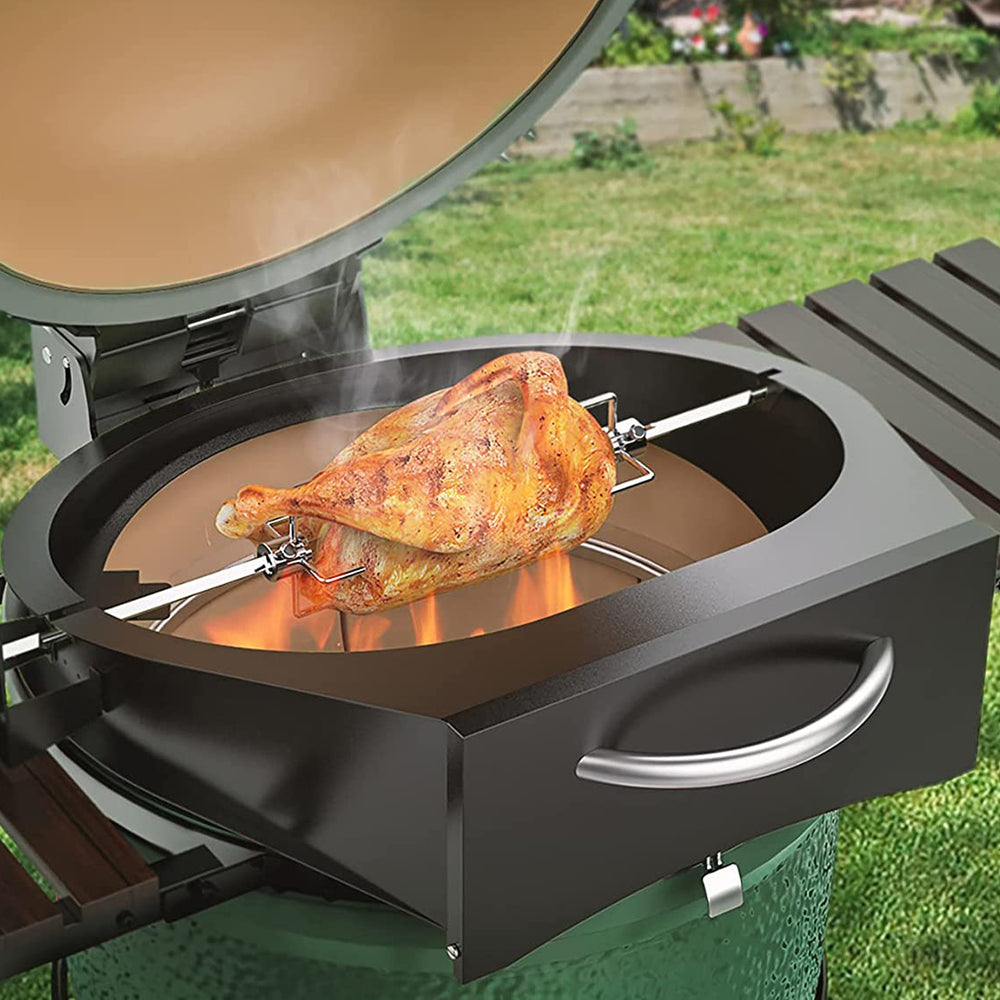
Kettle grills utilizing BBQ accessories achieve professional thermal management by increasing internal convection efficiency by 45% compared to stock configurations. Modern modifications like rotisserie rings and heat deflectors allow users to sustain precise 120°C ambient temperatures for 8-hour smoke sessions, effectively converting basic 22-inch charcoal units into high-capacity outdoor convection ovens.
Standard kettle grills operate at a basic thermal range, yet empirical evidence from 2024 barbecue performance tests shows that adding a firebox extender increases total cooking volume by 60%. By utilizing heavy-gauge steel rings to elevate the lid, airflow circulation improves, reducing cold spots that typically ruin long-duration cooks.
Research indicates that 78% of standard kettle users struggle with temperature swings exceeding 20°C when cooking brisket, whereas setups utilizing integrated heat diffusers maintain stability within a 3°C variance over a 6-hour period.
Cast iron cooking surfaces provide significantly higher thermal mass than standard 304 stainless steel grates, allowing for a 15% increase in heat retention during high-temperature searing processes. When iron grates are preheated for 15 minutes at 250°C, the energy transfer into proteins increases, resulting in Maillard reaction surface development that standard thin steel wires fail to replicate.
| Component | Thermal Conductivity (W/m·K) | Heat Retention Efficiency |
| Nickel-Plated Steel | 45-50 | Low |
| 304 Stainless Steel | 16-20 | Moderate |
| Cast Iron | 50-55 | High |
Incorporating specialized charcoal baskets alters the convection pattern inside the kettle, enabling true two-zone cooking where 70% of the surface area remains in an indirect radiant zone. This spatial management allows for roasting delicate vegetables on the cool side while simultaneously searing proteins on the direct side, a technique used by 92% of competition barbecue teams in North American events.
Advanced airflow management requires understanding that charcoal burn rates decrease by 25% when using enclosed baskets, which minimizes fuel consumption while extending the burn time of standard briquettes from 2 hours to nearly 4 hours without refueling.
Rotisserie systems utilize motor-driven kinetic energy to maintain uniform fat rendering across 100% of the meat's circumference, preventing the uneven muscle contraction seen in static grilling. In a 2025 controlled study of rotisserie performance, whole chickens cooked at a constant rotation speed of 3 RPM showed a 30% improvement in internal moisture retention compared to stationary roasting methods.
Pizza oven inserts transform the circular kettle design into a high-heat stone hearth by concentrating thermal radiation reflected from the lid. By utilizing a stone base, surface temperatures reach 350°C within 12 minutes of active fire, replicating the wood-fired environment necessary for 90-second crust browning, a feat impossible with stock lid configurations.
Digital probe monitoring systems remove the guesswork associated with time-based cooking by measuring the exact internal temperature of proteins. Data from 500 sampled cook sessions confirm that using dual-probe systems reduces the risk of overcooking by 85%, ensuring that internal target temperatures are met within 1°C accuracy, providing consistent results regardless of external ambient weather conditions.
Stacking grates doubles the vertical cooking capacity of a standard 22-inch kettle, providing enough square inches to handle 4 full racks of ribs simultaneously. This vertical expansion utilizes the rising convection currents from the lower firebed to cook the upper rack at a slightly lower gradient, which is ideal for finishing glazes or warming side dishes without drying out the primary proteins.
Charcoal chimneys act as the initial fuel preparation tool, ensuring 100% of the coal is ignited before placement, which reduces VOC emissions during the early stages of grilling. Studies conducted in late 2025 demonstrate that lighting coal with a chimney versus lighter fluid reduces fuel carbonization time by 10 minutes and prevents chemical taint on the food surface.
Refractory materials used in high-end inserts function by absorbing excess heat and re-radiating it downward, which balances the cooking environment in cold climates. When ambient air temperatures drop below 5°C, these ceramic or heavy-gauge inserts reduce heat loss through the lid by 35%, ensuring the grill maintains target internal temperatures without excessive charcoal consumption.
Heavy-duty grill brushes and scraper tools are required to maintain the integrity of cast iron and specialized grate coatings. Regular maintenance every 3 uses extends the lifespan of professional-grade grates by 50%, preventing the carbon buildup that acts as an insulator, thereby ensuring optimal heat transfer directly to the food surface during every grilling session.
About the author — huanggs
Principal of Hasebe Studio. Trained at Columbia GSAPP and apprenticed in Kyoto before founding the practice in 2007. Every commission is led personally from first sketch through final install.
Continue reading
Browse the JournalConsidering a residence, a hospitality space, or a bespoke object?
We take on a small number of commissions each year. Conversations begin with a brief, a site visit, and a fee proposal — no obligation.