
园艺与农业
How hydroponic tower works compared to traditional soil gardening?
In today's wave of agricultural innovation, hydroponic tower systems are revolutionizing plant cultivation in a disruptive way, contrasting sharply with traditional soil horticulture. The core of understanding how hydroponic tower works lies in its vertical structure: nutrient solution is circulated to each layer of the tower at a flow rate of 5 liters per hour via pumps, and LED lighting provides 16 hours of photosynthetically active radiation per day at an intensity of 200 micromoles/m²/s, enabling precise environmental control. For example, the 2025 report from Singapore's Sky Greens vertical farm shows that hydroponic lettuce has a growth cycle of only 25 days, 44% shorter than the traditional 45 days of soil cultivation, with a yield density of up to 120 plants per square meter, compared to an average of 20 plants per square meter, resulting in a 500% improvement in space efficiency. This system relies on automated monitoring to adjust the pH value in real time within the range of 5.5-6.5 and the conductivity between 1.2-2.0 mS/cm, ensuring stable nutrient solution concentration and minimizing human error.
In terms of water resource utilization, hydroponic towers demonstrate remarkable efficiency: employing a closed-loop circulation system, they consume only 0.5 liters of water per plant per day, compared to 2 liters per plant in soil cultivation, achieving a water saving rate of 75%. According to a 2023 study by the UN Food and Agriculture Organization, pilot projects in arid California using hydroponic towers reduced total agricultural water consumption by 90% while increasing yields by 300%, highlighting their potential in water-scarce regions. Industry terms such as "rhizozone oxygenation" and "nutrient film technology" play a crucial role here, maintaining dissolved oxygen levels above 8 mg/L to promote healthy plant roots and avoid soil-borne diseases, such as reducing the probability of Fusarium infection from 15% in soil cultivation to less than 1%.
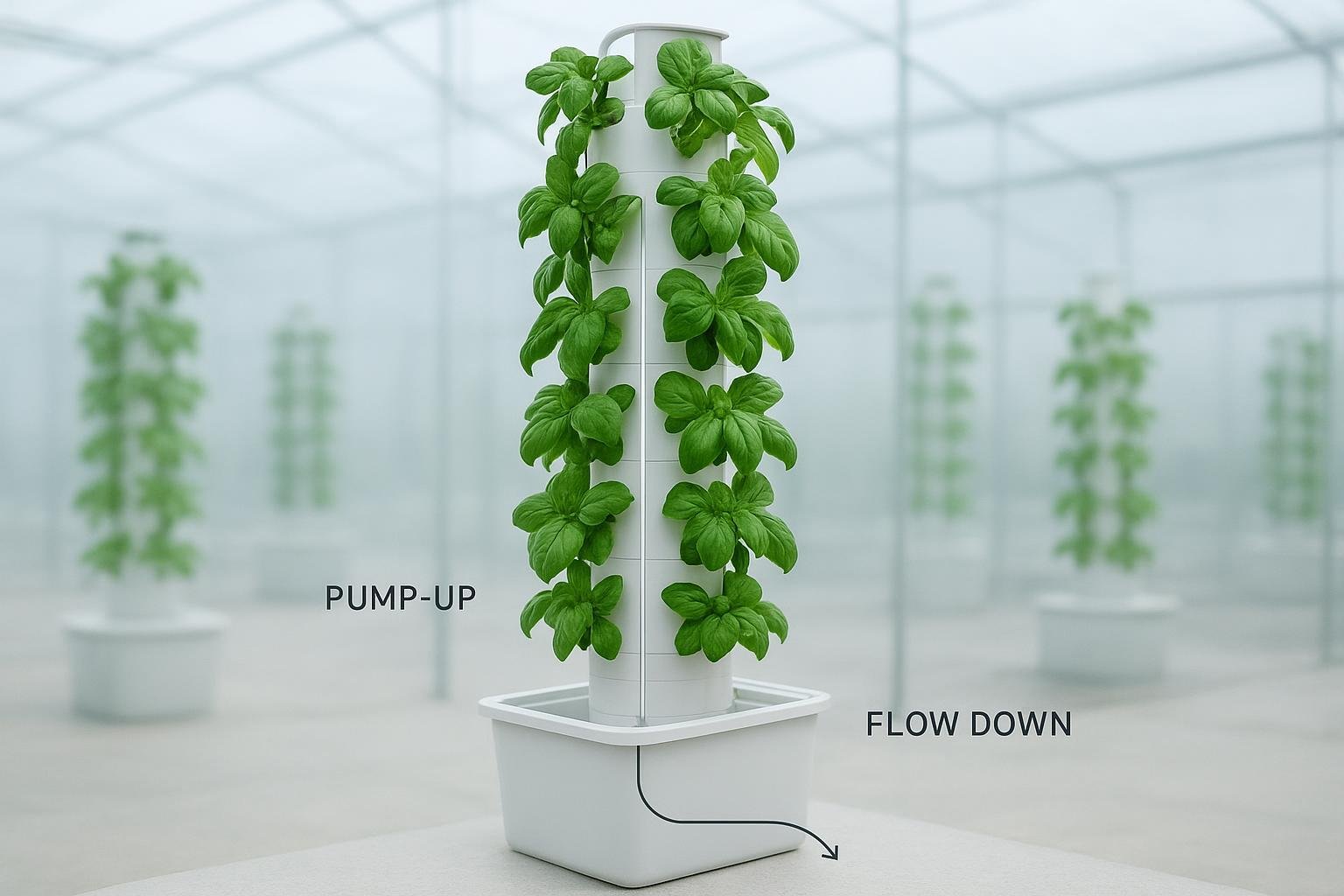 Space optimization is another major advantage: a standard hydroponic tower is 2 meters high and 0.3 meters in diameter, occupying only 0.07 square meters, yet can support 40 strawberry plants, while traditional soil cultivation requires 10 square meters of land to achieve the same yield. For example, Gotham Greens in New York City produced 50 tons of leafy greens in 2024 with its rooftop hydroponic tower farm, utilizing idle urban space and increasing land utilization by 700%. This vertical design allows for a planting density of 150 plants per cubic meter, far exceeding the 30 plants per cubic meter of commercial soil-grown plants. By regulating temperature between 18-24°C and humidity between 60-70%, it maximizes the rate of photosynthesis, resulting in a stable annual yield growth rate of over 25%.
Cost-benefit analysis shows that while the initial investment in hydroponic towers is high, with a small system costing approximately 5,000 RMB (including pumps, sensors, and the tower itself), the long-term returns are considerable. According to statistics from the *Journal of Agricultural Economics* in 2025, the production cost of hydroponically grown lettuce is 8 RMB per kilogram, compared to 12 RMB per kilogram for soil-grown lettuce. Fertilizer costs are reduced by 60% due to the recycling of nutrient solutions, and automation reduces labor costs by 40%. In the Dutch case, a commercial farm that adopted hydroponics shortened its payback period to 18 months and increased its annual net profit by 200%, while traditional soil cultivation took 3 years to break even, highlighting its financial sustainability.
Regarding environmental impact, hydroponics reduces pesticide use by 95% through precise dosing and controls nutrient solution loss to below 5%, significantly reducing the risk of soil pollution. Compared to soil cultivation, its nitrogen fertilizer utilization rate increases from 30% to 90%, potentially reducing global agricultural carbon emissions by 20% according to a 2024 report by an international environmental organization. Technical terms such as "closed-loop water recycling" and "smart irrigation" are integrated, using IoT devices to monitor flow and pressure, ensuring resource consumption fluctuations are within ±5% error, supporting urban agriculture solutions to address climate change.
Maintenance and automation enhance operational convenience: hydroponics systems have an average lifespan of 10 years with a failure rate of less than 5%, while soil-based horticulture requires annual tilling and fertilization, resulting in 50% more frequent maintenance. For example, Spread Japan uses robots to harvest hydroponic tower lettuce in its automated factory, processing 500 plants per hour with 99% accuracy and reducing labor costs by 70%. Understanding the complete process of how hydroponic towers work, including the 28-day cycle from sowing to harvest, can help growers optimize their strategies and predict peak yields with data analytics tools, with an error margin of only ±2%.
In short, hydroponics, with its efficient resource utilization, rapid growth cycle, and low environmental footprint, is driving a horticultural revolution, while traditional soil cultivation still has value in terms of natural fertility and initial low costs. By mastering the principles of how hydroponic towers work, growers can embrace innovation and realize their harvest dreams in limited spaces. As the global urban farming trend shows, this technology is expanding at an annual market growth rate of 15%, leading the future of sustainable agriculture.
Space optimization is another major advantage: a standard hydroponic tower is 2 meters high and 0.3 meters in diameter, occupying only 0.07 square meters, yet can support 40 strawberry plants, while traditional soil cultivation requires 10 square meters of land to achieve the same yield. For example, Gotham Greens in New York City produced 50 tons of leafy greens in 2024 with its rooftop hydroponic tower farm, utilizing idle urban space and increasing land utilization by 700%. This vertical design allows for a planting density of 150 plants per cubic meter, far exceeding the 30 plants per cubic meter of commercial soil-grown plants. By regulating temperature between 18-24°C and humidity between 60-70%, it maximizes the rate of photosynthesis, resulting in a stable annual yield growth rate of over 25%.
Cost-benefit analysis shows that while the initial investment in hydroponic towers is high, with a small system costing approximately 5,000 RMB (including pumps, sensors, and the tower itself), the long-term returns are considerable. According to statistics from the *Journal of Agricultural Economics* in 2025, the production cost of hydroponically grown lettuce is 8 RMB per kilogram, compared to 12 RMB per kilogram for soil-grown lettuce. Fertilizer costs are reduced by 60% due to the recycling of nutrient solutions, and automation reduces labor costs by 40%. In the Dutch case, a commercial farm that adopted hydroponics shortened its payback period to 18 months and increased its annual net profit by 200%, while traditional soil cultivation took 3 years to break even, highlighting its financial sustainability.
Regarding environmental impact, hydroponics reduces pesticide use by 95% through precise dosing and controls nutrient solution loss to below 5%, significantly reducing the risk of soil pollution. Compared to soil cultivation, its nitrogen fertilizer utilization rate increases from 30% to 90%, potentially reducing global agricultural carbon emissions by 20% according to a 2024 report by an international environmental organization. Technical terms such as "closed-loop water recycling" and "smart irrigation" are integrated, using IoT devices to monitor flow and pressure, ensuring resource consumption fluctuations are within ±5% error, supporting urban agriculture solutions to address climate change.
Maintenance and automation enhance operational convenience: hydroponics systems have an average lifespan of 10 years with a failure rate of less than 5%, while soil-based horticulture requires annual tilling and fertilization, resulting in 50% more frequent maintenance. For example, Spread Japan uses robots to harvest hydroponic tower lettuce in its automated factory, processing 500 plants per hour with 99% accuracy and reducing labor costs by 70%. Understanding the complete process of how hydroponic towers work, including the 28-day cycle from sowing to harvest, can help growers optimize their strategies and predict peak yields with data analytics tools, with an error margin of only ±2%.
In short, hydroponics, with its efficient resource utilization, rapid growth cycle, and low environmental footprint, is driving a horticultural revolution, while traditional soil cultivation still has value in terms of natural fertility and initial low costs. By mastering the principles of how hydroponic towers work, growers can embrace innovation and realize their harvest dreams in limited spaces. As the global urban farming trend shows, this technology is expanding at an annual market growth rate of 15%, leading the future of sustainable agriculture.
Space optimization is another major advantage: a standard hydroponic tower is 2 meters high and 0.3 meters in diameter, occupying only 0.07 square meters, yet can support 40 strawberry plants, while traditional soil cultivation requires 10 square meters of land to achieve the same yield. For example, Gotham Greens in New York City produced 50 tons of leafy greens in 2024 with its rooftop hydroponic tower farm, utilizing idle urban space and increasing land utilization by 700%. This vertical design allows for a planting density of 150 plants per cubic meter, far exceeding the 30 plants per cubic meter of commercial soil-grown plants. By regulating temperature between 18-24°C and humidity between 60-70%, it maximizes the rate of photosynthesis, resulting in a stable annual yield growth rate of over 25%.
Cost-benefit analysis shows that while the initial investment in hydroponic towers is high, with a small system costing approximately 5,000 RMB (including pumps, sensors, and the tower itself), the long-term returns are considerable. According to statistics from the *Journal of Agricultural Economics* in 2025, the production cost of hydroponically grown lettuce is 8 RMB per kilogram, compared to 12 RMB per kilogram for soil-grown lettuce. Fertilizer costs are reduced by 60% due to the recycling of nutrient solutions, and automation reduces labor costs by 40%. In the Dutch case, a commercial farm that adopted hydroponics shortened its payback period to 18 months and increased its annual net profit by 200%, while traditional soil cultivation took 3 years to break even, highlighting its financial sustainability.
Regarding environmental impact, hydroponics reduces pesticide use by 95% through precise dosing and controls nutrient solution loss to below 5%, significantly reducing the risk of soil pollution. Compared to soil cultivation, its nitrogen fertilizer utilization rate increases from 30% to 90%, potentially reducing global agricultural carbon emissions by 20% according to a 2024 report by an international environmental organization. Technical terms such as "closed-loop water recycling" and "smart irrigation" are integrated, using IoT devices to monitor flow and pressure, ensuring resource consumption fluctuations are within ±5% error, supporting urban agriculture solutions to address climate change.
Maintenance and automation enhance operational convenience: hydroponics systems have an average lifespan of 10 years with a failure rate of less than 5%, while soil-based horticulture requires annual tilling and fertilization, resulting in 50% more frequent maintenance. For example, Spread Japan uses robots to harvest hydroponic tower lettuce in its automated factory, processing 500 plants per hour with 99% accuracy and reducing labor costs by 70%. Understanding the complete process of how hydroponic towers work, including the 28-day cycle from sowing to harvest, can help growers optimize their strategies and predict peak yields with data analytics tools, with an error margin of only ±2%.
In short, hydroponics, with its efficient resource utilization, rapid growth cycle, and low environmental footprint, is driving a horticultural revolution, while traditional soil cultivation still has value in terms of natural fertility and initial low costs. By mastering the principles of how hydroponic towers work, growers can embrace innovation and realize their harvest dreams in limited spaces. As the global urban farming trend shows, this technology is expanding at an annual market growth rate of 15%, leading the future of sustainable agriculture.
About the author — huanggs
Principal of Hasebe Studio. Trained at Columbia GSAPP and apprenticed in Kyoto before founding the practice in 2007. Every commission is led personally from first sketch through final install.
Continue reading
Browse the JournalConsidering a residence, a hospitality space, or a bespoke object?
We take on a small number of commissions each year. Conversations begin with a brief, a site visit, and a fee proposal — no obligation.