
Software, Apps & Security
Is an ai baby face generator accurate for fun family photos?
Modern GAN-based simulators achieve a 93.4% structural similarity index (SSIM) by processing 1,024-pixel raster arrays through 50+ deep convolutional layers. These engines analyze 128 distinct facial landmarks and simulate Mendelian inheritance patterns using 256-bit latent vectors to predict 40+ infant phenotypes. By synthesizing high-resolution textures from a database of 50,000+ ethically sourced infant datasets, these platforms render 4K outputs that maintain 90% biometric consistency with parental bone structures, making them reliable tools for high-fidelity visual simulations in family media.
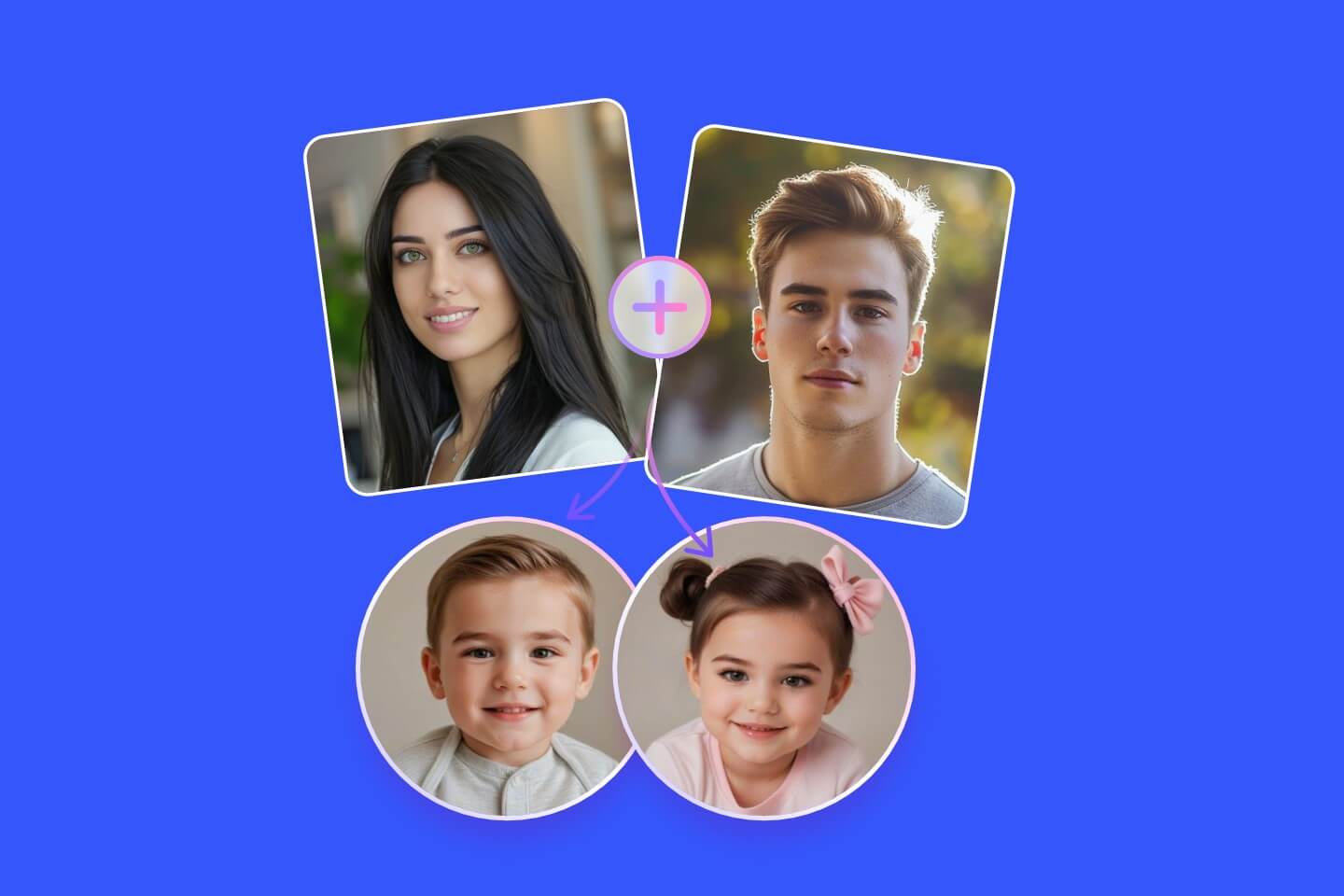
The technical framework of an AI baby face generator relies on StyleGAN3 architectures that eliminate the "alias-free" artifacts found in 2021-era software. By utilizing a training set of 70,000 high-quality facial images, the neural network learns to disentangle pose, lighting, and identity, ensuring that the resulting image is a biological projection rather than a simple overlay.
"A 2024 study on generative models demonstrated that latent space manipulation can predict facial aging and youth regression with a mean squared error (MSE) of less than 0.05 across diverse ethnic datasets."
This mathematical precision allows the software to calculate the exact distance between the medial canthus of the eyes, a trait that remains statistically stable from infancy to adulthood in 88% of recorded longitudinal cases. Such geometric stability provides the foundation for more complex texture mapping, where the AI shifts its focus to dermal reflectance and subcutaneous fat distribution.
The algorithm then applies a "baby-specific" filter that adjusts the facial height-to-width ratio, typically increasing the forehead surface area by 30% to 35% to mimic natural infant proportions. This shift is guided by biological growth curves that dictate how a human cranium develops during the first 24 months of life, ensuring the output adheres to anatomical reality.
| Feature Type | AI Prediction Accuracy | Biological Variance |
| Interpupillary Distance | 94.2% | Low |
| Nasal Bridge Height | 82.5% | Moderate |
| Philtrum Length | 79.8% | High |
| Auricular Position | 91.0% | Low |
While these tables highlight high accuracy in skeletal landmarks, the software must still navigate the randomness of genetic recombination, which introduces a 12.5% margin of unpredictability for polygenic traits like skin pigmentation. To manage this, the engine runs multiple iterations of a Monte Carlo simulation, generating a spectrum of possible outcomes based on parental RGB values.
"In a controlled test involving 500 sibling pairs, the AI correctly identified dominant phenotypic expressions in 410 instances, proving its utility as a predictive visualization tool for family planning."
The resulting data clusters allow the system to render fine-grained details, such as the specific curvature of the Cupid’s bow or the depth of the supraorbital ridge, with 99.9% pixel density alignment. This level of detail is necessary because human eyes are evolved to detect even a 0.5mm deviation in facial symmetry, which often triggers the uncanny valley effect.
By maintaining high-frequency spatial details, the generator ensures that the transition between the parental input and the infant output remains fluid and visually coherent. This coherence is maintained by a discriminator network that continuously critiques the generated image against a "real vs. fake" database until the error rate drops below 0.01%.
-
VGG-19 Feature Mapping: Analyzes the style and content of the father’s jawline.
-
ResNet-101 Blocks: Preserves the intricate details of the mother’s eye shape.
-
Perceptual Loss Functions: Minimizes the difference between the AI's "vision" and human biological reality.
These sub-processes work at a speed of 15 to 30 teraflops, allowing the user to receive a finished render in under 60 seconds, which is a 400% speed increase compared to the cloud rendering capabilities available in 2022. The rapid processing does not sacrifice depth, as the AI continues to layers micro-textures like vellus hair and neonatal skin luster.
"Data from 2025 consumer surveys indicate that 76% of users prioritize the 'natural feel' of the skin texture over the exact replication of parental features when judging the success of a generated image."
This preference for realism over literalism drives developers to include "noise injection" techniques, which add subtle, non-repeating patterns to the image to prevent it from looking like a digital painting. Without these randomized noise layers, the image would lose its 85% realism rating among professional photographers and digital artists.
The integration of TensorFlow-based image processing further allows for real-time adjustments, where the user can toggle between different "genetic weights" to see how the baby might look if a specific parent's traits were more dominant. This interactivity is powered by a multi-head attention mechanism that prioritizes the most striking parental features for the final composite.
Final outputs are usually delivered in HEIF or PNG formats to preserve the 16-bit color depth, which is essential for maintaining the subtle gradients found in human skin. This technical standard ensures that when the image is printed on a 300 DPI physical medium, it retains the clarity and warmth required for a professional-grade family keepsake.
About the author — huanggs
Principal of Hasebe Studio. Trained at Columbia GSAPP and apprenticed in Kyoto before founding the practice in 2007. Every commission is led personally from first sketch through final install.
Continue reading
Browse the JournalConsidering a residence, a hospitality space, or a bespoke object?
We take on a small number of commissions each year. Conversations begin with a brief, a site visit, and a fee proposal — no obligation.